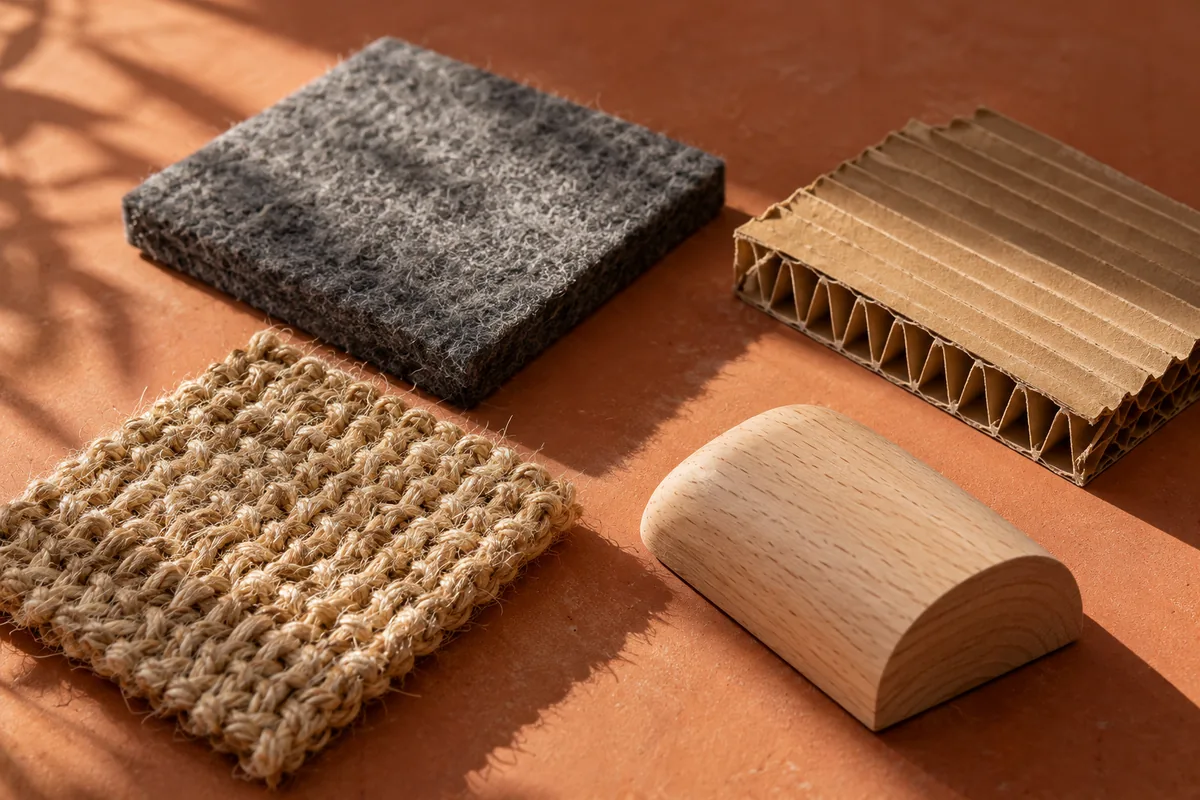
Match the material to the product’s job
Compare materials by construction, intended use and care requirements, then use color and finish to connect the range. Design notes help buyers evaluate the differences between felt, corrugated cardboard, sisal and wood without treating appearance as proof of performance.
Felt can shape tunnels, pockets and compact toys. Cardboard introduces scratch surfaces and folded hideouts. Sisal provides a different scratching texture, while wood can support handles, frames and puzzle layouts. Review the material guide alongside the products you are considering, and ask which material grade and thickness apply to the selected sample.
Look beyond the main image. Consider edges, joins, openings, removable components and how the customer will assemble or clean the item. For a replaceable-core scratch bed, compare insert fit, replacement-pack identification and the instructions provided with the product.
A shared palette can connect different constructions, but each surface may need a different branding method. Include your color references, label positions and packaging preferences in an OEM/ODM brief. Review the physical sample before approving the final material, construction and presentation.