Choose a cardboard cat scratcher by its usable scratching surface, construction, stability and replacement plan. For a refillable design, specify the insert and holder together: profile, thickness, fit, removal method and product-version compatibility matter more than a shared “replacement” label.
This guide helps brands and retailers compare scratcher formats, plan cat scratcher refills and prepare a sample review. Images illustrate design options. The written specification and approved sample define the version supplied.
Which scratching format belongs in your range?
Scratching is a normal feline behavior, according to the Feline Veterinary Medical Association’s environment guidance. Product selection should provide a clearly described scratching surface and intended placement. It should not promise that one product will stop all furniture scratching.
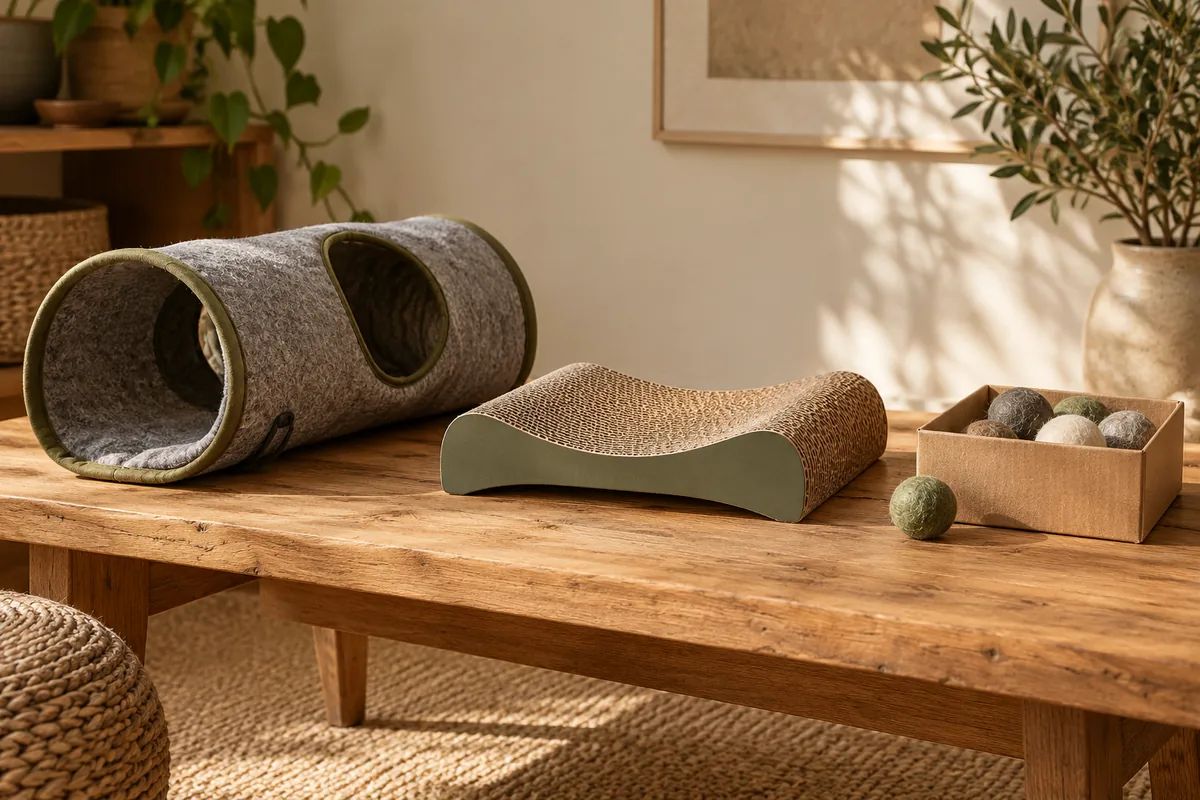
Consider the customer’s available floor space, preferred presentation and ability to obtain replacements. A sculptural cardboard item can anchor a display. An oval scratch bed combines a defined insert with a surrounding tray. A sisal mat needs an attachment brief, while a framed incline needs a structural one.
| Format | Collection role | What the buyer should confirm |
|---|---|---|
| Modular cardboard scratcher, A03 | A shaped scratching surface with several pieces | Set contents, joint or placement method, usable surface and pack arrangement |
| Replaceable-core scratch bed, A04 | A starter product with a separately specified refill | Tray and insert profile, fit, removal and refill identification |
| Sisal furniture-protection mat, A05 | A scratching format intended for a stated furniture position | Backing, bound edges, strap arrangement and suitable mounting surface |
| Wood-and-sisal scratcher, C02 | An inclined scratching panel to evaluate for a range extension | Frame joints, panel attachment, stability and assembly |
Compare the Scratch collection using these different requirements. A cardboard insert is not automatically a replacement for a sisal panel, and a similar silhouette is not evidence that two holders accept the same refill.
How do you specify a cardboard cat scratcher?
Ask for the board construction, exposed scratching profile, dimensions and side-panel arrangement. Specify the material and finish used to hold the structure together. “High-density cardboard” is incomplete unless the quotation explains what construction is being supplied and how it will be checked.
Measure both the external footprint and the useful scratching area. For a scratch bed, record the internal resting or scratching area separately from the tray rim. For a modular product, confirm whether the quoted size describes one component or the complete arrangement.
During sampling, compare edge condition, attachment of side panels, visible debris after agreed handling and the product’s behavior on its intended floor surface. Set the review method before comparing results. Do not publish a lifespan or “dust-free” claim from the appearance of a new sample.
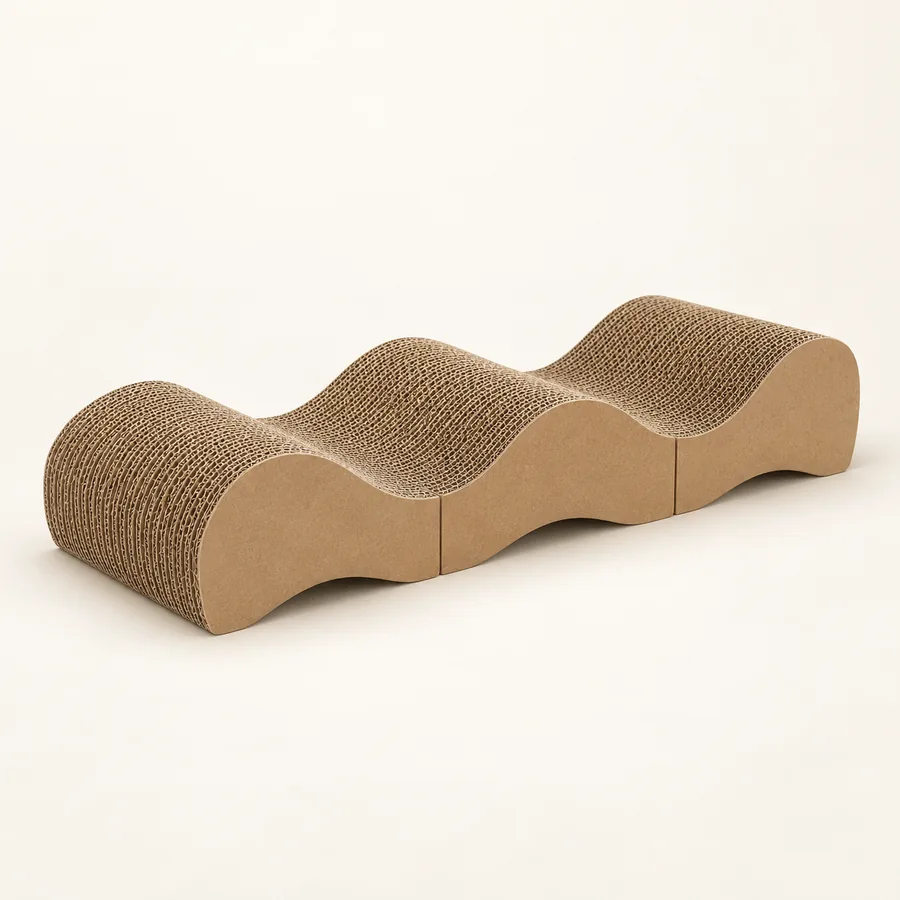
The A03 illustration shows a multi-piece format. Record the supplied piece count and arrangement rather than quoting only the largest outside dimension.
What makes a replacement insert compatible?
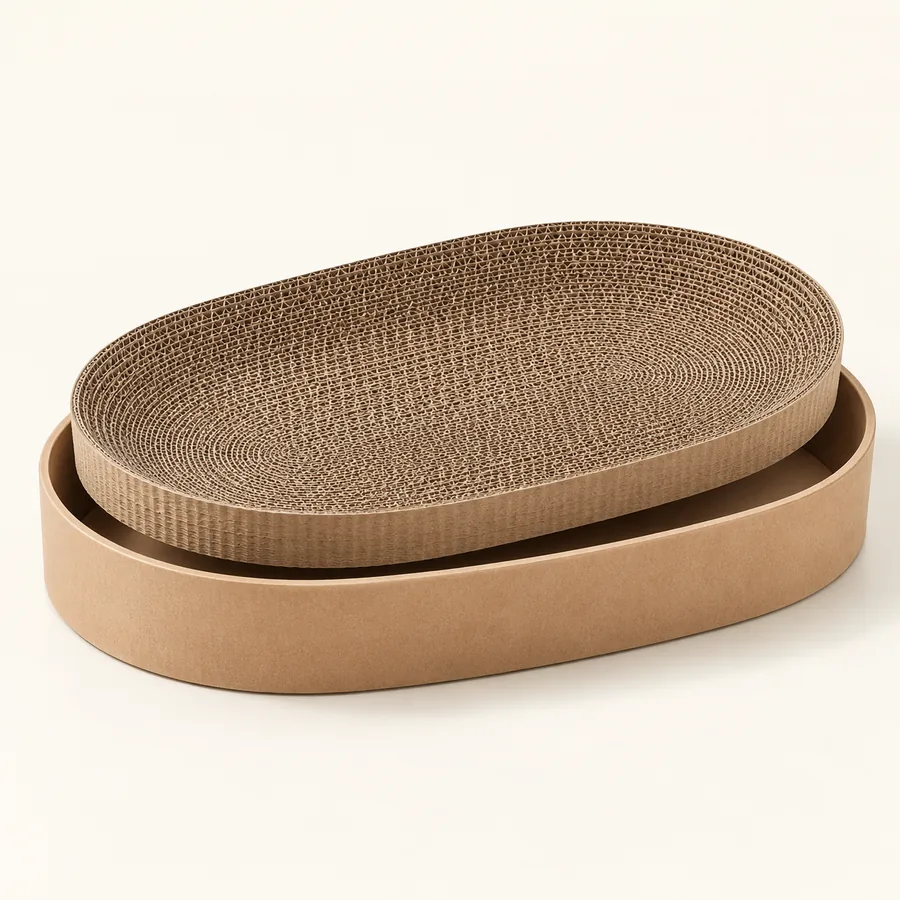
A cat scratcher replacement insert is a component designed to fit a specified holder and revision. Compatibility requires an agreed shape, dimensions, thickness and seating method. The refill needs to remain in its intended position while also allowing the replacement method described to the customer.
Create a versioned drawing for both parts. For an oval insert, length and width alone may miss a different end curve. For a stepped holder, the contact surfaces and thickness influence seating. Ask the supplier to define permissible variation; do not invent a tolerance from a photograph.
| Refill specification | Why it matters | Evidence to request |
|---|---|---|
| Holder SKU and revision | Identifies the product the refill is intended to fit | Matching labels and versioned drawings |
| Insert profile and thickness | Controls the seating and usable surface | Measurements at agreed points |
| Retention and removal method | Explains how the insert stays in place and is changed | Demonstration with the assembled sample |
| Pack contents | Prevents a refill pack being confused with a complete bed | Product name, count and packing list |
| Change-control rule | Prevents later revisions from being assumed interchangeable | Written compatibility confirmation |
Check a replacement sample in the actual holder, not only beside it. If either part changes after approval, repeat the fit check and update the compatibility statement before selling the new refill.
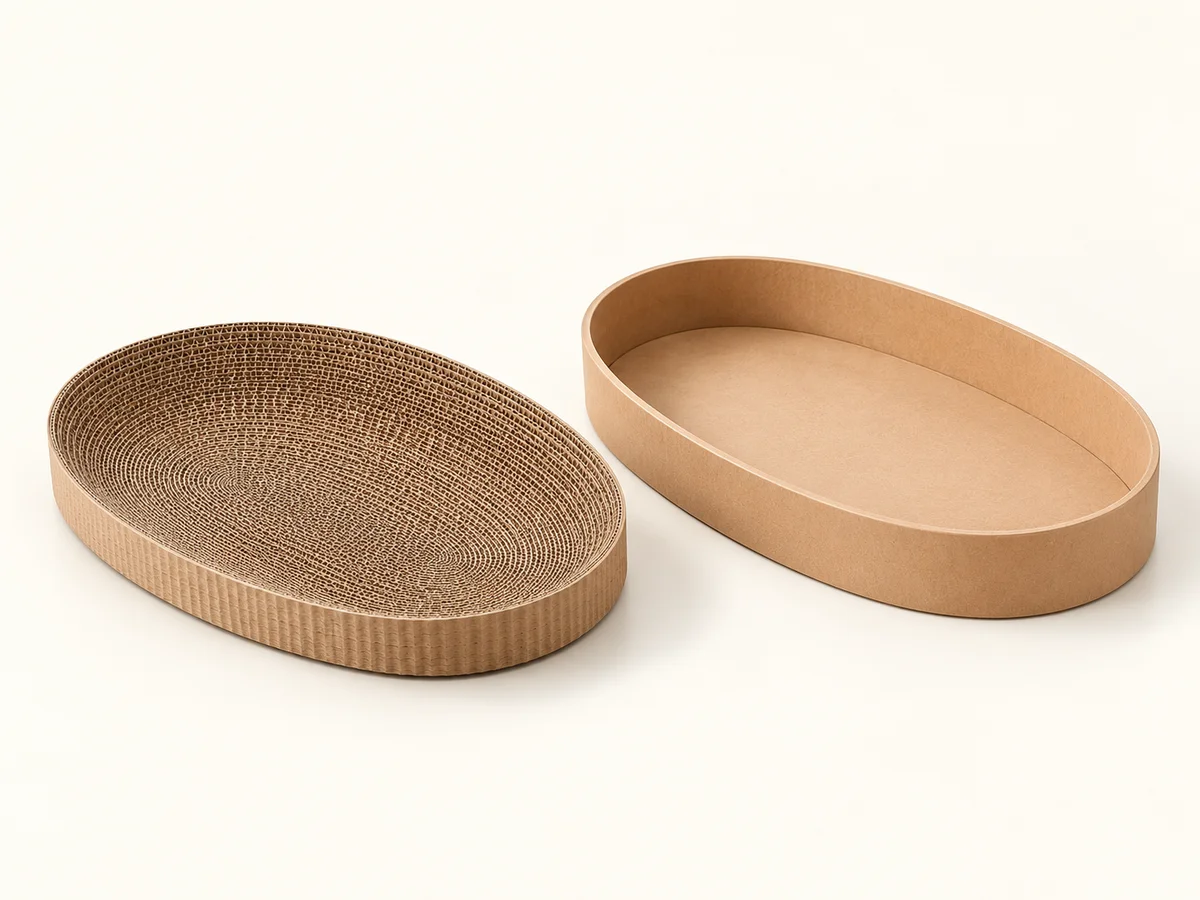
Separate insert and tray illustration: sample approval must establish the actual fit, retention and replacement method.
How should starter products and refills be sold together?
Give the complete scratch bed and refill pack distinct SKUs and names. Show which holder the refill fits and whether the customer receives one insert or a multi-pack. Repeat that information on the retail pack, carton label and online product listing.
A retailer may want a starter pack plus individual refills; another may need refills bundled into a launch assortment. Quote quantities and pack formats separately. A supplier’s ability to make the starter product does not by itself confirm continuing refill availability, so discuss repeat-order conditions and version control early.
Avoid calling a design universally compatible. If a refill works only with one size or revision, say so. Keep a reference holder and approved insert available for reviewing future shipments. A replaceable component creates a replenishment option; it does not establish a measured environmental benefit without evidence.
When should you compare sisal instead of cardboard?
Compare sisal when the brief centers on a woven surface, furniture placement or a framed structure. Specify weave, backing, binding and attachment. For a strapped mat, include the dimensions and shape of the intended furniture surface, and review the sample in that position.
For wood-and-sisal designs, confirm the frame material, edge finish, joints and panel attachment. Do not treat an inclined unit as interchangeable with a flat mat. A material change may affect assembly, packaging and customer instructions; request a separate quotation scope.
See the materials guide for the specification fields used across felt, cardboard, sisal and wood. Cleaning instructions should also remain material-specific: do not transfer a textile care claim to corrugated cardboard.
What should your scratcher sample checklist include?
- Product SKU, revision, dimensions and material construction.
- Set count, assembled arrangement and included accessories.
- Edge finish, side-panel attachment and accessible loose components.
- Stability and positioning on the intended surface.
- Insert fit, removal and repeated placement in the approved holder.
- Starter and refill labels with an unambiguous compatibility statement.
- Individual-pack and carton measurements for the quoted version.
- Specific revisions, photographs and final approval status.
Keep visual observations separate from formal test reports. Agree any performance claim and its supporting test evidence before using it in sales copy. The sample approval guide provides a record format for transferring decisions into the order specification.
Buyer questions about scratchers and refills
Do all cardboard cat scratcher refills fit the same holder?
No. Profile, thickness, holder geometry and revision can differ. Order by the named compatible SKU and check a physical refill in the holder before approving the assortment.
How often should a cardboard insert be replaced?
There is no single interval established for every product and household. Base customer instructions on inspection of the surface and structure, the product’s intended use and the confirmed guidance for that design. Do not promise a fixed lifespan without evidence.
Can starter products and refill packs share one MOQ?
Ask for separate confirmation. The complete product, refill, color or printed pack may have different quantity conditions. Record whether MOQ applies per SKU, per version or across the total order.
Turn your selection into a purchasing brief
Include the scratcher format, intended placement, starter and refill quantities, holder revision, branding and packaging needs. Ask for both components in the sample review. Start with A04 scratch beds, compare A03 modular scratchers, or use the RFQ guide before requesting a quotation.
Share your selected SKUs, market and customization ideas. Discuss product specifications, packaging and sample arrangements for your collection.
Start an inquiry ↗