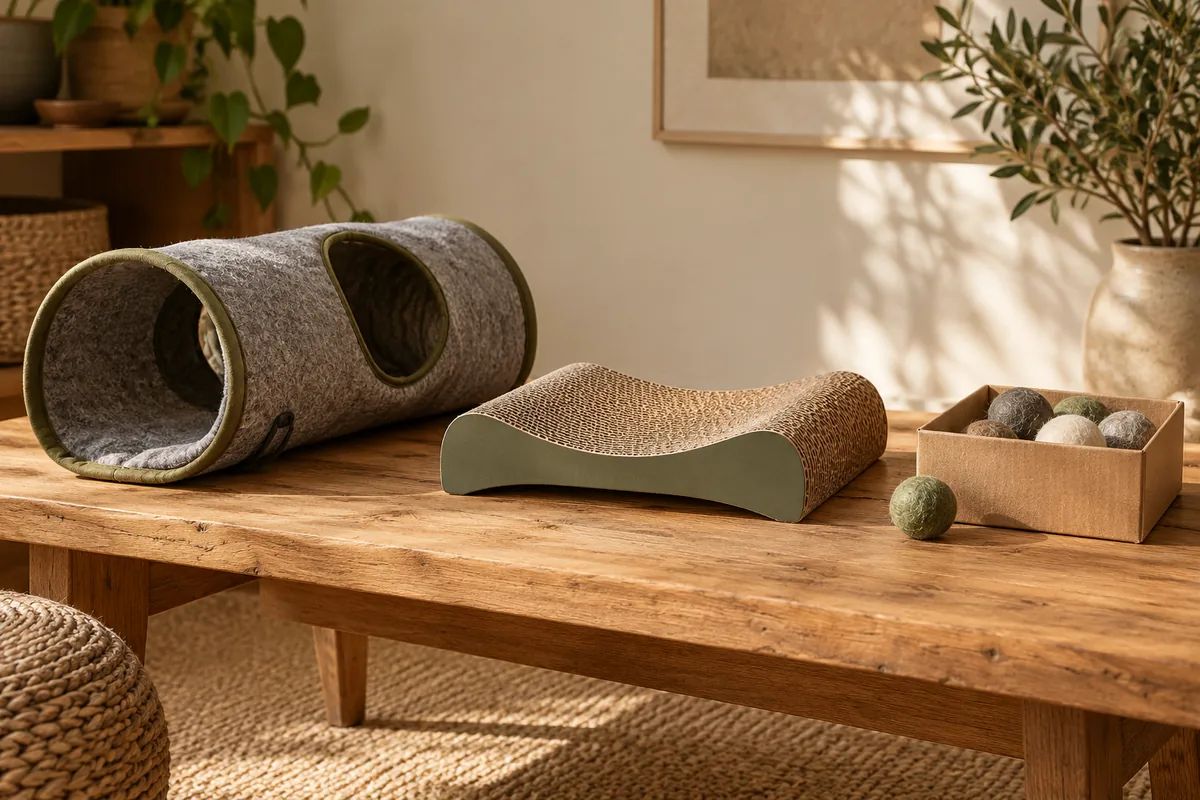
Choose a felt cat tunnel by its usable opening, assembled shape, connection system, care requirements and packed size. For pet brands and retailers, the best starting point is a product that fits the intended customer and sales channel, with a specification that can be checked on a physical sample.
This guide compares indoor tunnel formats and turns the selection into a purchasing brief. Product images are design illustrations; final construction, dimensions and packaging are agreed through the quotation and approved sample.
What should a cat tunnel add to your collection?
A tunnel introduces a passage and a partially enclosed place into an indoor play range. The Feline Veterinary Medical Association’s environmental guidance identifies a safe retreat, play opportunities and separate resources as parts of a cat’s environment. That provides context for assortment planning; it does not prove that a particular tunnel suits every cat.
Define your intended use before choosing a silhouette. A home-focused range may need a product that can stay in a living room. A seasonal retail collection may prioritize coordinated colors and a compact individual pack. A tunnel-and-bed offer requires clear contents and enough space for both pieces. These are different purchasing briefs, even if each uses the phrase “cat tunnel.”
Which tunnel format should you compare?
| Format | Useful collection role | Main purchasing checks |
|---|---|---|
| Detachable felt tunnel | A focal exploration product with a coordinated palette | Section alignment, connector access, shape retention and assembly instructions |
| Tunnel and separate bed set | A matched exploration-and-resting offer | Both items’ dimensions, lining, set count and combined packaging |
| Collapsible fabric tunnel | A fold-away format to evaluate against your brief | Support structure, exposed ends, folded size and opening recovery after unpacking |
| Outdoor enclosure tunnel | A separate outdoor-containment category | Purpose-specific enclosure design and installation; do not substitute an indoor play tunnel |
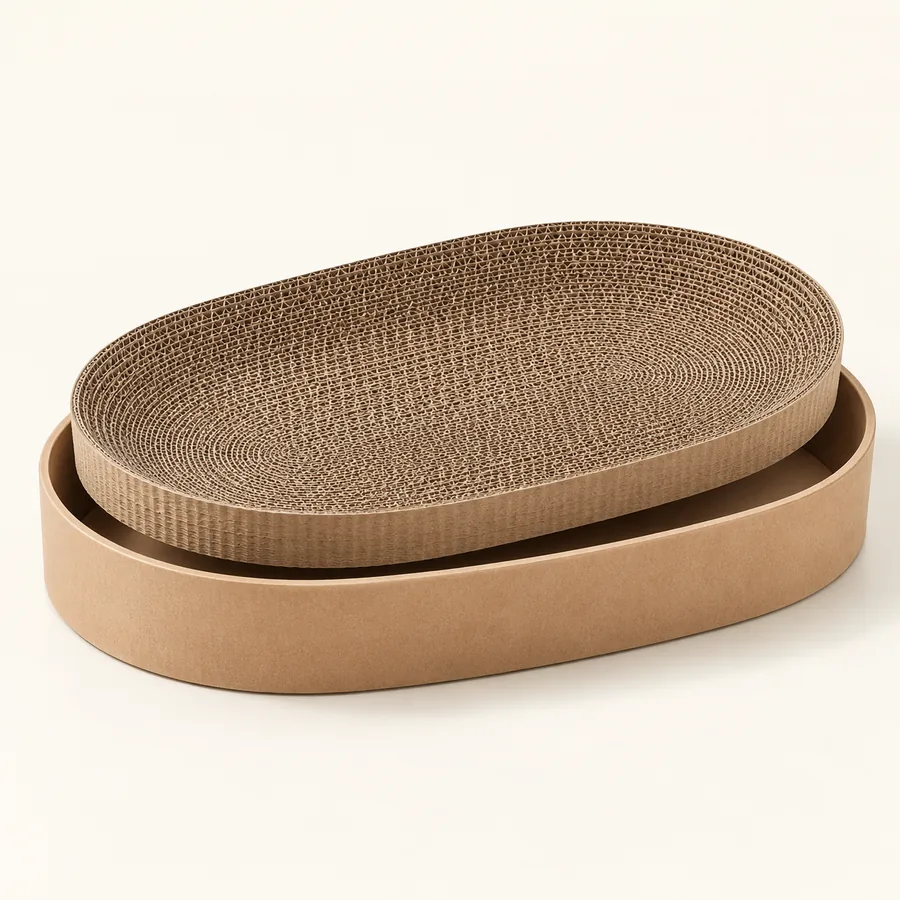
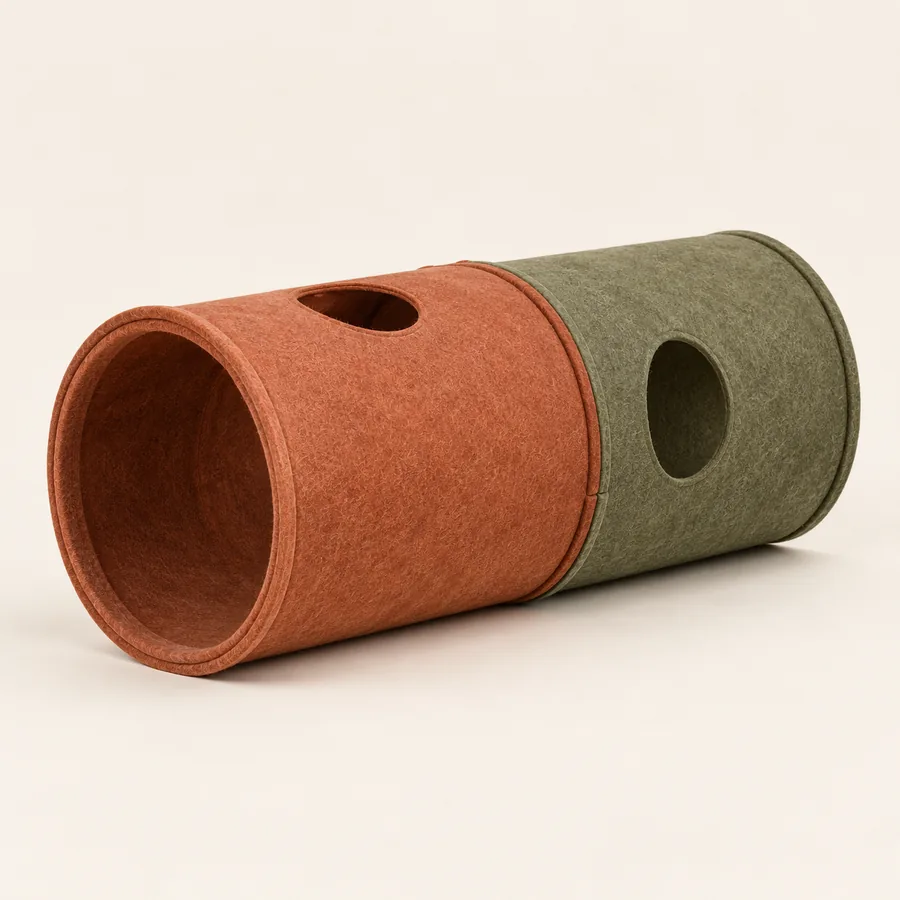
MewToys A01 is the starting point for a two-section felt tunnel brief. A02 is a tunnel and separate oval bed set. A matching set does not mean the tunnel converts into the bed; if conversion is required, specify it as a separate development request.
How do you specify size and openings?
Specify assembled length, internal clearance, entrance dimensions and side-opening dimensions separately. An overall width can include the wall or binding, so it does not automatically describe the space through which a cat can pass. Ask the supplier to identify measurement points on a drawing and repeat them on the sample record.
For a large-cat brief, compare clearance and the narrowest point rather than simply adding length. For a curved or joined tunnel, check the passage at the connection as well as at the entrance. Explain the intended customer segment without promising one universal “all cats” fit.
Record whether side openings are for peeking or intended as access points. Specify edge finish, position and distance from connectors. These details influence the way the product is assembled and presented; they should be agreed before approving packaging artwork.
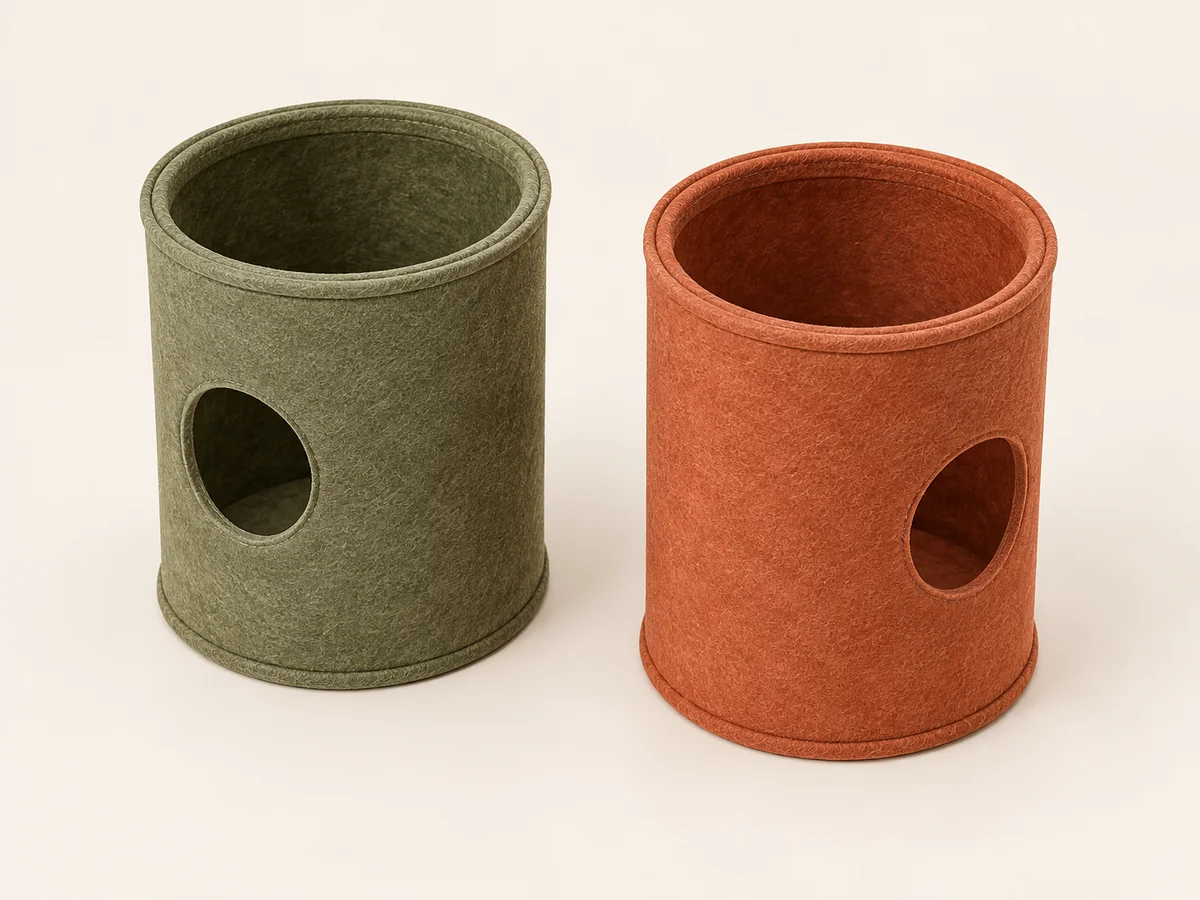
Separate-section illustration: use the sample to verify how the sections connect and whether the assembled passage remains clear.
What matters when selecting felt and connectors?
“Felt” names a material form, not a complete composition. Ask for fiber composition, thickness, lining where applicable and the finish used at the edges. A PET felt specification and a wool-blend option should remain separate in the quotation. Color alone cannot establish fiber content or cleaning performance.
Review the body and connector together. A thicker panel may hold a shape differently and require a different joint. Ask how a buyer assembles and separates the sections, whether a connection can be checked during use, and which parts are replaceable. A drawing or product image cannot establish connector strength.
Your sample review should include shape recovery after unpacking, seam and binding condition, accessible loose components and visible fiber shedding. Agree any test method and acceptance criteria with the supplier before inspection. Do not turn a visual check into an unsupported claim that the product has passed a safety standard.
How should a tunnel-and-bed set be presented?
Treat the bed as its own specification: outer size, usable resting area, lining, removable components and care instructions. Confirm whether the customer receives two complete products or a tunnel plus an accessory. The individual pack, product listing and contents card should describe the same offer.
A shared palette can connect the pieces without requiring identical construction. If the bed lining needs different care from the tunnel body, make that difference visible in the instructions. Request both pieces in the sample package when the set is the product being quoted.
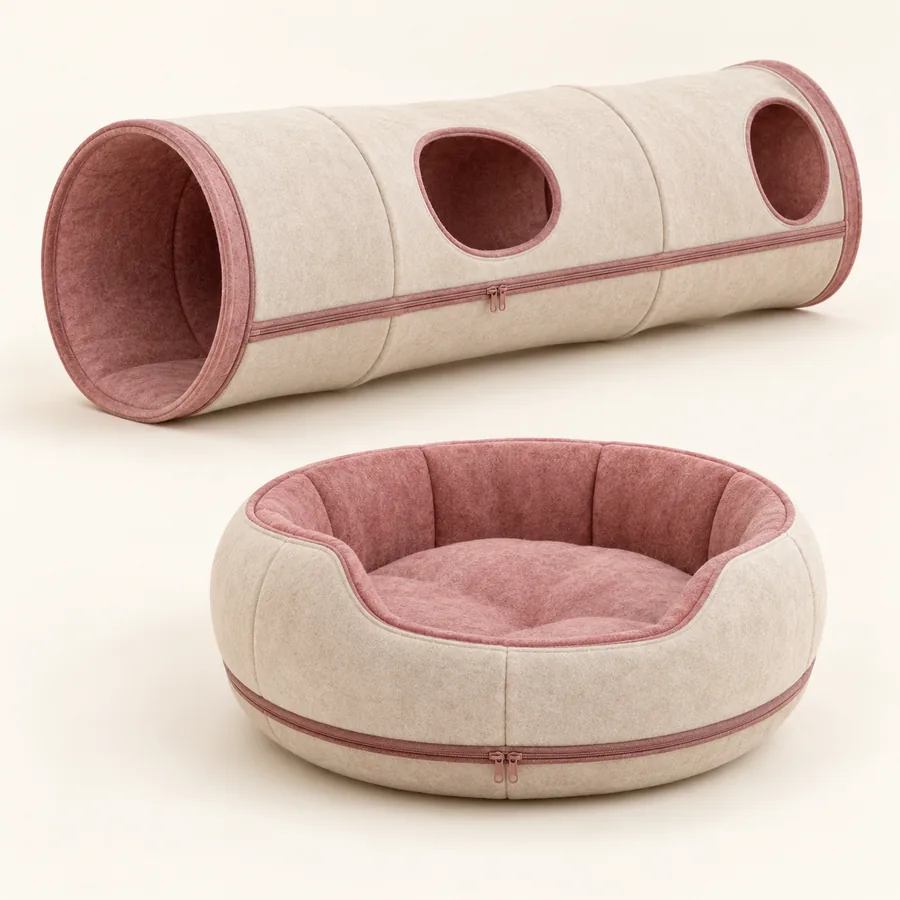
A02 illustrates a two-piece set. Confirm both pieces and their packaging together when comparing quotations.
How do packaging and care affect the buying decision?
Compare assembled size, packed size and master-carton information as separate measurements. Detachable sections may create packaging options, but they do not establish a shipping saving by themselves. Ask for actual individual-pack dimensions, units per carton, carton dimensions and gross weight for the version you are evaluating.
Consider the unpacking sequence: can a customer identify the pieces, assemble the tunnel and find the care card without guessing? If a sleeve is proposed, ask how it keeps the set together and protects exposed edges. For a box, check whether the structure recovers after the expected storage period.
Care instructions should match the exact felt, lining and connector. Do not add “machine washable” to a retail listing unless the construction and care method have been confirmed. Include periodic checking of connections and edges, and explain when a damaged item should be taken out of use.
What should you check on a tunnel sample?
- Match the SKU, revision, material and colors to the quotation.
- Measure the entrance, internal clearance, side openings and assembled length.
- Assemble and separate the sections using the supplied instructions.
- Check joints, binding, lining and shape after unpacking.
- Compare the stated contents with the product, care card and retail pack.
- Record specific revisions with photos and measurement points.
- Keep the approved specification and sample version together for order handover.
Use the sample approval guide for the broader review record. When comparing several suppliers, give each the same size, construction and packaging brief so the quotations describe a comparable product.
Buyer questions about felt cat tunnels
Is a longer cat tunnel always a better choice?
No. Length, internal clearance, opening layout, floor space and packaging serve different needs. A longer tunnel may still have an unsuitable entrance or connector. Compare the complete structure against your customer and channel brief.
Can I order a private label cat tunnel?
Discuss the selected SKU, branding placement, palette and packaging with the supplier. Confirm MOQ separately for the product, each color and custom packaging. A logo request and a new connection structure may involve different sampling work; the private label guide explains that distinction.
Is an indoor felt tunnel suitable for outdoor containment?
An indoor play tunnel should not be presented as an outdoor containment system. Outdoor access needs a product designed and specified for that purpose. Keep the intended-use statement consistent across packaging, instructions and the product listing.
Prepare your cat tunnel inquiry
Send the SKU or reference format, intended customer, destination market, estimated quantity, required openings, material preference and packaging format. Separate essential requirements from options you want quoted. Use our RFQ guide to organize the request, browse the Explore collection, or request tunnel specifications and samples.
Share your selected SKUs, market and customization ideas. Discuss product specifications, packaging and sample arrangements for your collection.
Start an inquiry ↗