Key points
- Furniture-side mats and floor scratchers serve different positions in the home.
- A05 includes one woven sisal mat with two adjustable straps.
- Measure the coverage area and the strap route separately when choosing the fit.
A sisal cat scratching mat and a floor scratcher answer different placement needs. One brings a scratching surface to furniture; the other creates a separate spot on the floor. Start with where the cat scratches and how the product will sit in the room, then compare material, attachment and size.
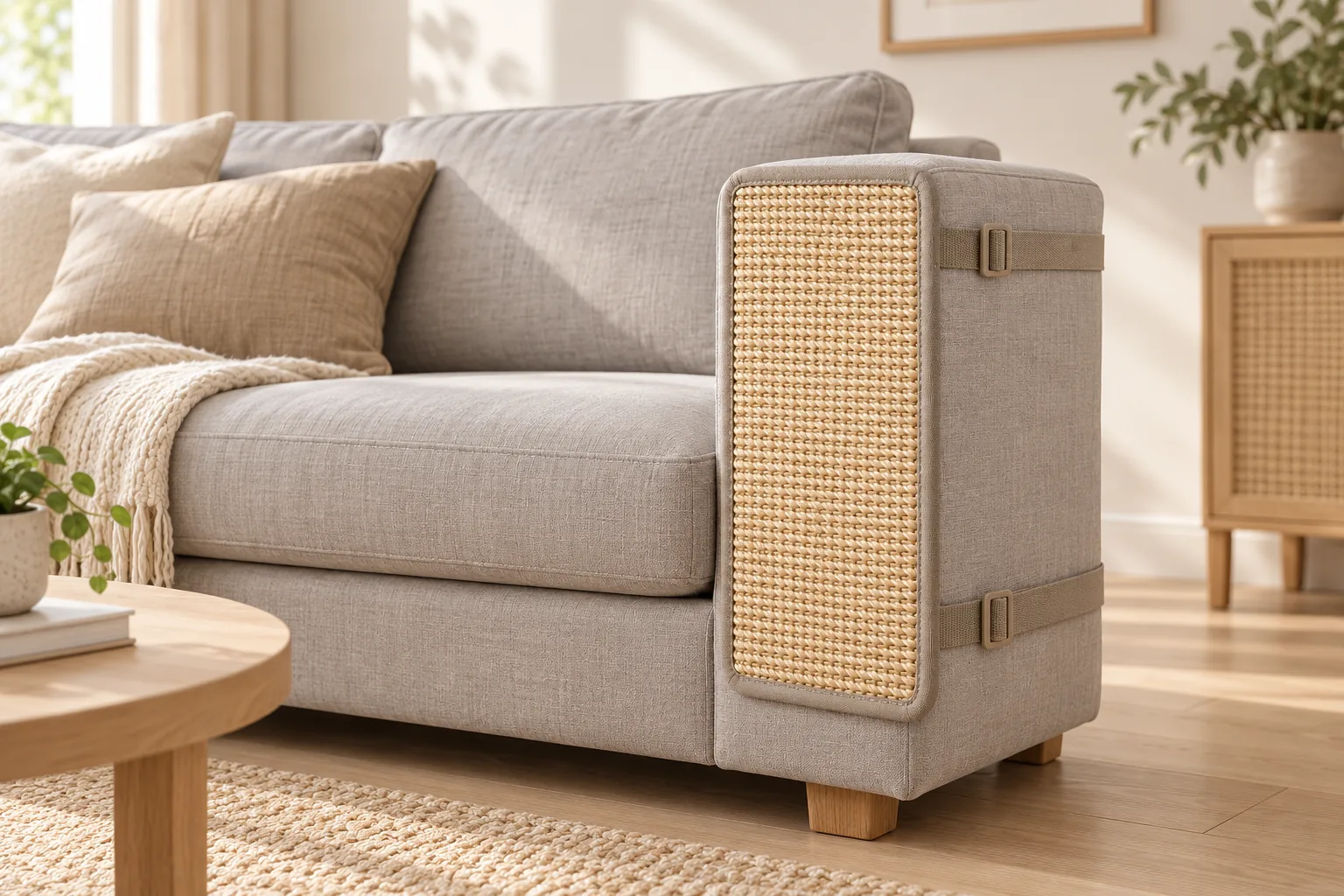
Our A05 sisal scratching mat is designed for furniture-side use. A rectangular woven face, textile-bound edges and two adjustable straps make up one compact product without a separate freestanding frame. This guide explains where that format belongs, how to choose its fit and how it can complement a floor-scratcher range.
Sofa-side mat vs floor scratcher at a glance
| Buying point | Strap-on sisal mat such as A05 | Floor scratcher |
|---|---|---|
| Main position | Attached to a suitable furniture area | Placed on the floor as a separate item |
| Scratching surface | Woven sisal face on a bound panel | Depends on the model, such as corrugated cardboard |
| Support | Furniture and the strap arrangement | Its own base, tray or body |
| Space planning | Uses the selected furniture area | Needs an accessible floor position |
| Fit decision | Coverage, furniture shape and strap route | Footprint, approach space and floor stability |
| Moving to another position | Release and refit the straps | Lift and reposition the item |
| Range role | A furniture-side scratching option | A separate floor-based scratching option |
“Floor scratcher” describes placement, not a single material or shape. A flat board, an oval scratch bed and a shaped cardboard unit can all sit on the floor. Compare the individual format with the position your customer wants to furnish.
Start with scratching position, not material alone
A customer looking for a scratching surface beside a sofa has a different starting point from one choosing a board for an open floor area. The furniture-side option puts the woven surface at a specific location. A floor model creates its own place and can sit near furniture without being attached to it.
Cats Protection’s scratching guide distinguishes vertical and horizontal scratching preferences and recommends providing a pad for cats that prefer a horizontal surface. This makes orientation a useful starting point for product choice.
For a range comparison, ask two questions: where will the product go, and from which direction will the cat approach? An upright mat at the end of a sofa arm offers a different approach from a low cardboard scratch bed. Both can have a place in the same room, and they give retailers two distinct product roles to explain.
What does the A05 include?
A05 contains one rectangular sisal mat with two adjustable straps. Its natural sisal woven face is surrounded by textile binding, with a textile backing behind it. The narrow panel format brings the scratching face to a furniture position without adding a freestanding frame.
The woven surface, bound corners and two strap assemblies are the key parts of the design. The panel covers the selected area; the straps secure its position around the intended support. Their roles are different, which is why panel coverage and strap fit should be considered separately.
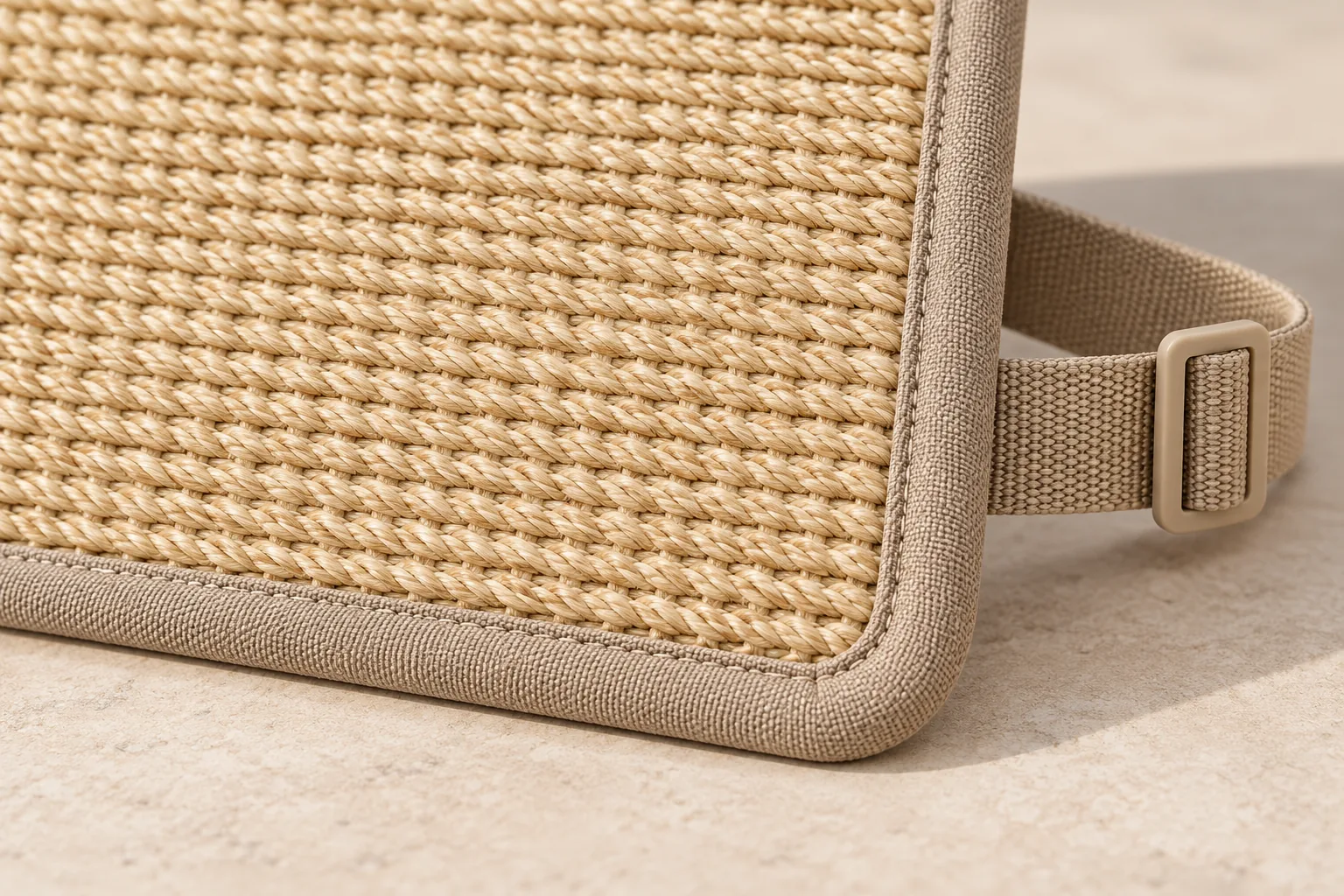
The woven face provides the scratching area; textile binding finishes the edge and a webbing strap sits behind it.
The natural fiber color and oat-toned binding offer a restrained starting palette. For a branded collection, the border, label and packaging can carry the color direction while the sisal remains the main visible surface.
How to choose the coverage and strap fit
Begin with the area you want the panel to cover. Measure its height and width on the furniture, then note the shape: a squared arm end, rounded surface and broad side panel create different fitting conditions. A photograph from the front and side helps explain that shape in a product enquiry.
Next, follow the route each strap will take around the support. This is a different measurement from the visible panel width. The route needs enough access for the strap to pass, return and be adjusted. Measure upper and lower routes separately if the furniture changes shape between them.
| Detail to record | How to describe it | Why it matters |
|---|---|---|
| Coverage area | Height and width of the selected area | Defines the panel you want to position |
| Furniture profile | Square, rounded or another shape, with photographs | Explains the surface behind the mat |
| Upper strap route | Path and distance around the intended support | Defines the upper fixing position |
| Lower strap route | Path and distance at the lower fixing position | Accounts for changes in furniture shape |
| Access | Gaps or openings available for routing | Shows how the straps can be fitted |
| Furniture finish | Upholstery or other contact surface | Helps select the backing for the placement |
This information makes the choice practical. Instead of describing a sofa only as “large” or “small,” it shows the actual area to cover and the support used by both straps. For brands planning several sizes, the same information helps define meaningful size options.
Placing a strap-on scratching mat
Use the selected furniture area to position the panel with the sisal face exposed. Arrange both straps around the intended support and adjust them so the mat sits securely. Keep the buckles to the side or back of the scratching face and tidy the free strap ends.
Leave the cat a clear approach from the floor. Avoid placing a table, storage basket or loose cable directly in front of the panel. The room layout is part of the product’s use: the face needs to be reachable, not simply visible in a photograph.
After fitting, check that the mat stays in position and that the straps and backing sit comfortably against the furniture. Include the same quick check in routine care. If you move the mat to another piece of furniture, fit it for that new position rather than keeping the previous strap adjustment.
When is a floor scratcher the better choice?
Choose a floor scratcher when you want a separate low-level scratching position, a product that can be moved without refitting straps, or a different body shape within the collection. Its footprint becomes part of the room layout, just as the furniture profile matters for a strap-on mat.
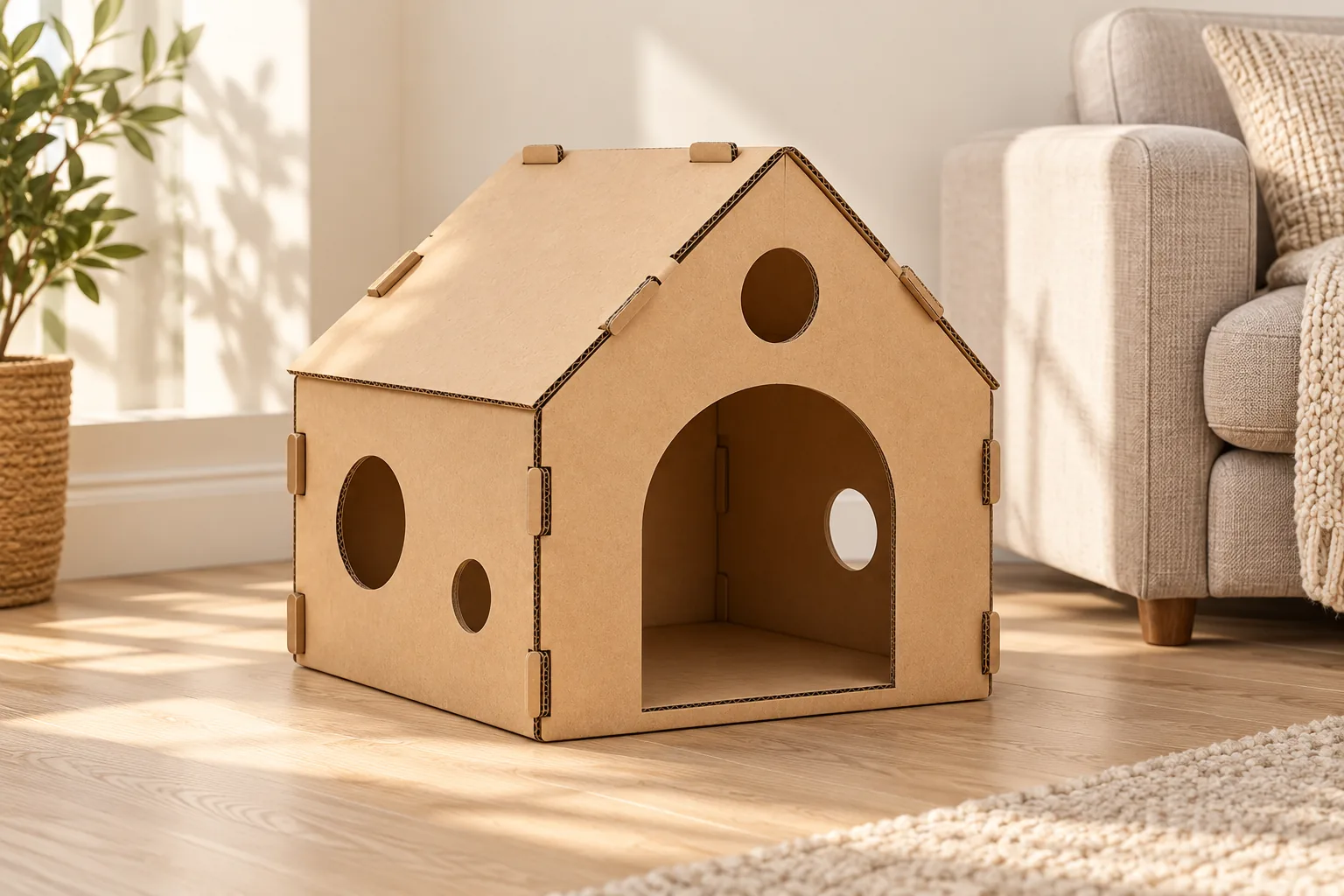
Our A04 scratcher bed with replaceable core uses an oval cardboard insert and outer tray. It offers a floor-based scratch-and-lounge format. The A03 modular cardboard scratcher uses three wave-profile modules for a different floor arrangement.
A05 fills another role: a woven scratching surface at furniture. A retailer can group these products by placement, helping customers choose a sofa-side mat or a separate floor item without treating one as a direct substitute for every other scratcher. The cardboard scratcher and refill guide explains the insert-and-holder side of that choice.
Choosing a mat for a brand or retail range
For an assortment, define the product’s main use before adding colors or pack variations. A05 is a furniture-side mat with straps. Its buying story is the woven surface, the covered area and the way it is positioned.
| Range goal | Product direction | Selection focus |
|---|---|---|
| Add a furniture-side surface | A05 strap-on sisal mat | Coverage, furniture profile and strap fit |
| Add a low scratch-and-lounge shape | A04 oval scratch bed | Body shape and replaceable insert format |
| Add a shaped cardboard arrangement | A03 modular scratcher | Three-piece layout and floor footprint |
| Offer both furniture and floor positions | A05 with a floor model | Clear roles and separate pack contents |
| Coordinate a branded mat collection | A05 size and finish options | Panel, backing, binding, straps and label |
A mixed collection does not require every product to share the same material. Clear roles matter more: sisal at furniture, cardboard in a floor body, and a packaging identity that helps the customer recognize the collection.
Flat sleeve or carton: packaging the mat
A05’s flat panel gives buyers two straightforward packaging directions: a paper sleeve or a carton. A sleeve can leave part of the woven surface visible, while a carton surrounds the product and creates space for instructions and brand artwork.
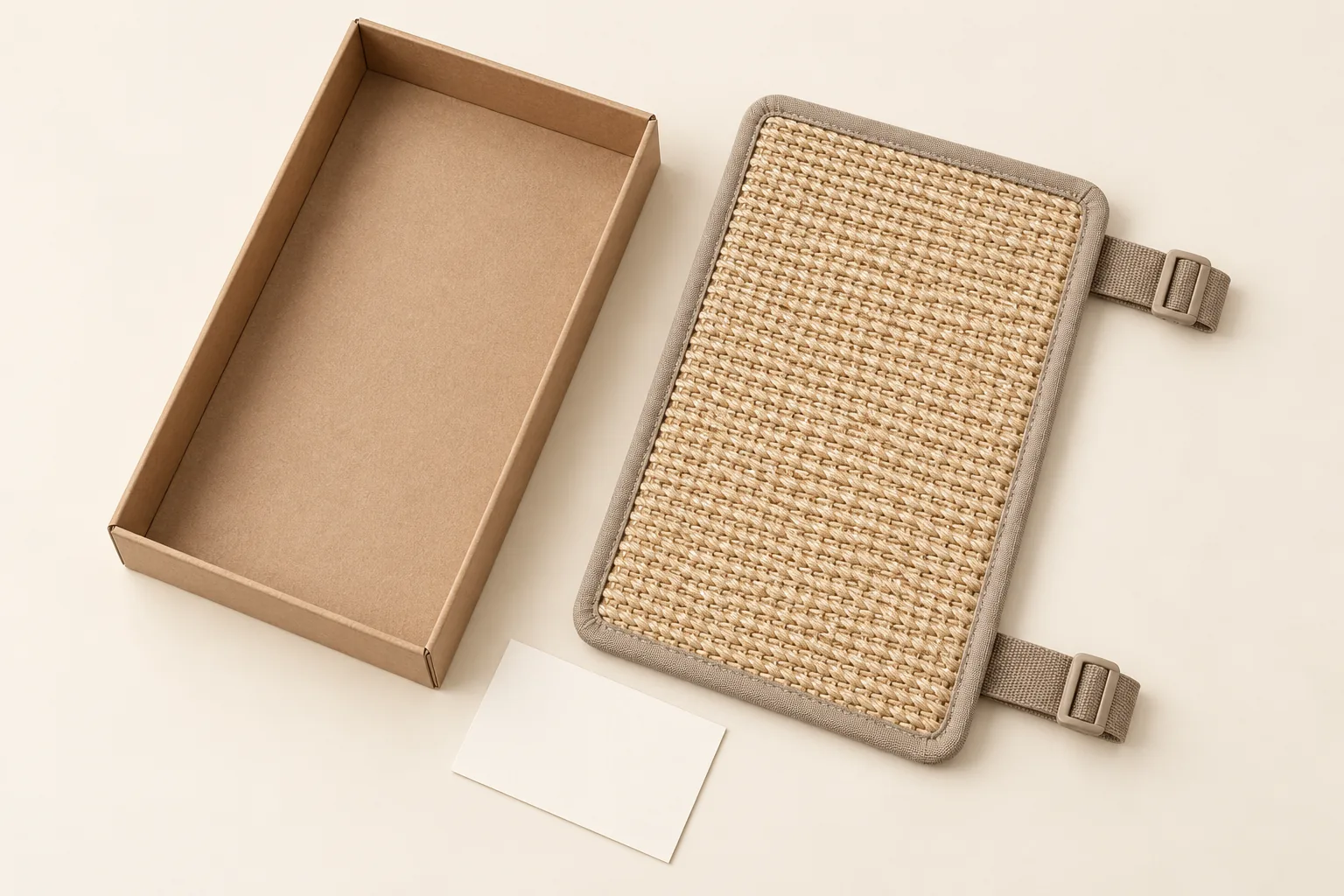
A flat carton and a separate card provide a layout for the mat and its placement instructions.
Plan the pack around one mat with two straps. Keep the straps together behind the panel, with buckles positioned so they do not press into the visible face. A placement card can explain panel orientation, routing both straps, keeping buckles outside the scratching area and dry-brush care.
For a quotation, distinguish the product count from packaging options. For example, 200 mats with a sleeve and 200 mats with a carton are two pack proposals for the same quantity, unless you intend to order both batches. This keeps a packaging comparison clear without mixing it with a change in product volume.
Everyday care
Use a dry brush to remove loose fibers and keep the woven face clear. Include the binding, backing and strap tension in a quick routine check. Reposition a buckle if it moves toward the scratching area, and keep strap ends neat.
If you remove the mat for cleaning around the sofa, keep its straps with it and refit both when returning it. Clear placement and care instructions are useful parts of the retail offer, especially when the customer is choosing a strap-on mat for the first time.
Size, binding and packaging for your brand
Our A05 enquiry can bring panel size, backing, binding color, strap length, buckle and label into one brief. Start with the intended placement and your product quantity, then add the finish and packaging choices. Front and side photographs of the furniture are useful when planning a particular fitting.
The private-label guide explains how to organize branding requirements, and the RFQ guide helps combine product, quantity, packaging and delivery destination. Browse the scratching collection to plan a mat alongside floor-based products.
Frequently asked questions
What is a sofa-side sisal scratching mat?
It is a woven scratching surface positioned at suitable furniture. A05 uses a rectangular panel with textile binding and two adjustable straps for the intended support.
Should I choose a mat or a floor scratcher?
Choose by the position you want to provide. A05 brings the surface to furniture; a floor scratcher creates a separate position on the floor. The cat’s approach and the room layout help guide the choice.
What should I measure for a strap-on mat?
Measure the coverage height and width, then the upper and lower strap routes around the support. Record furniture shape and routing access as well as dimensions.
What is included with A05?
One mat with two adjustable straps. A paper sleeve or carton can be discussed for the retail presentation.
How do we enquire about A05?
Send us A05, the quantity, coverage requirements, strap-route information, preferred finish and packaging, plus the delivery destination. Our sampling page explains the next step toward a product sample.